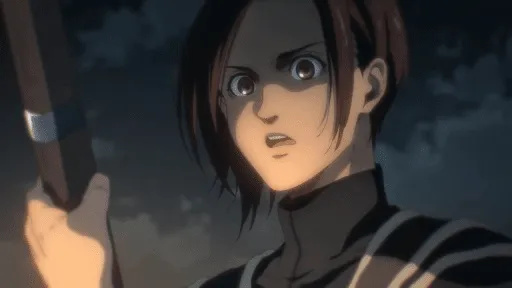
Sasha Blouse
104th cadet · marksman
A hunter from the edge of the map whose appetite for life becomes an act of defiance.
- Origin
- Dauper District
- Specialty
- Hunting and marksmanship
- Symbol
- A potato · a rifle · a bow
Story and role
Sasha is first remembered for stealing a potato during a training lecture. The scene is funny because her hunger is so direct, but it also establishes the social distance she has travelled. She comes from a forest community where food, language, and survival follow a different rhythm from the capital. Joining the military is not just a career choice; it is an attempt to step outside the narrow future her father understands for her.
Her instincts make her a brilliant scout. Sasha can read a landscape, find a target, and act before the formal chain of command catches up. She saves a child in a village, moves through a Titan’s home with a bow, and later becomes a skilled rifleman. Yet the series never turns her into a perfect action figure. Sasha’s fear, appetite, and awkwardness remain visible. Her kindness often arrives through a practical gesture: sharing food, protecting a stranger, or making space for someone who has nowhere else to go.
The raid on Liberio gives Sasha’s story its cruelest turn. She dies just as the old team is returning from a mission that has crossed a moral boundary, and her last word is a request for more meat. The simplicity of that memory makes her absence feel enormous. Later, the young girl who killed Sasha carries the same name as the war that created the shot. Gabi’s encounter with Sasha’s family does not erase the loss, but it opens a route away from inherited hatred. Sasha remains the series’ reminder that joy is not a distraction from war; it is one of the things war is trying to destroy.
Sasha also changes how the Corps understands belonging. Her accent, habits, and knowledge of the forest mark her as an outsider in the capital, but the squad gradually learns to treat those differences as practical wisdom rather than comic colour. She can make a group laugh, then become the person who notices a child hiding in a smoke-filled house. That combination prevents her from becoming a symbol of innocence. Sasha knows what hunger does and what a weapon can do; she simply refuses to let those facts take every generous impulse from her. The food shared around the table at the Braus family’s home becomes a kind of memorial because it connects people who should have remained enemies. Her death cannot be repaired by that connection, but it can become part of a new vocabulary. In a story about inherited bodies, Sasha is remembered through the everyday acts that bodies need in order to keep living.